


Exotac fireROD V2 & fireROD XL – Field Test
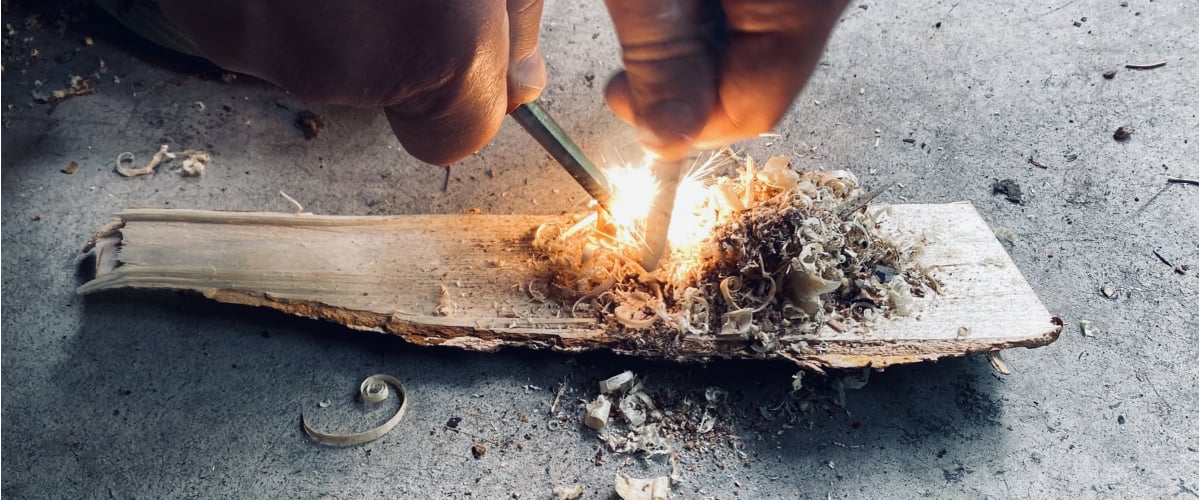
Making fire is one of the foundational outdoor skills that anyone can learn. A good fire starter should work in any weather and produce a strong enough spark to ignite tinder. While lighters and matches are familiar to everyone, they aren’t the only – nor always the most reliable –tools for starting a fire. The ferro rod, or fire steel, is a traditional but still highly relevant ignition tool for the outdoors. It works by scraping the ferrocerium rod with a striker or the spine of a knife ground to a sharp 90° edge, producing a spray of sparks directed onto the tinder.
Exotic by Nature: Exotac
Exotac is a U.S.-based company known for producing high-quality, compact fire-starting and survival tools. Their products are characterized by innovative design, weather resistance, and precision CNC-machined construction. In this test, we evaluated the brand’s two flagship fire starters: the fireROD V2 and the larger fireROD XL, both in real outdoor use.
Design Features
Both models share a common construction: a cylindrical anodized aluminum handle that acts as a grip. The ferro rods are threaded and replaceable, meaning the entire unit doesn’t need replacing when the rod wears out. The handle is hollow and sealed with a screw-cap featuring an O-ring, turning it into a watertight micro storage compartment.
Inside, both rods come pre-loaded with Exotac’s weather-resistant quickLIGHT tinder – 2 pieces in the V2 and 4 in the XL. The XL also features a strip of tape resembling Gorilla Tape wrapped around the body, which can be used for repairs, securing gear, or as emergency tinder.
Both models feature a textured lanyard attachment point on the cap, to which a striker could be attached. The XL version includes a slightly longer lanyard than the V2.
Importantly, neither model comes with a striker, and Exotac does not manufacture one designed specifically for these rods. As a result, users must supply their own–either a separate striker or a knife with a sharpened spine.
Ignition Performance
Both rods easily ignited crumpled newspaper and paperboard with frayed edges. The ferrocerium material used by Exotac appears relatively soft, which results in generous spark production. However, the sparks tend to scatter widely rather than focusing on a specific area. Despite the volume and heat of the sparks, this made it harder to ignite small wood shavings.
The most effective ignition method was to press the fire starter firmly onto a bed of fine wood shavings and scrape the ferro rod vigorously back and forth. The XL rod produced larger sparks, delivered slightly faster ignition, and offered overall better ignition power.
With good quality natural tinder or the pre-packed quickLIGHT tinder from the rod’s storage compartment, both models performed well. In such situations, careful tinder prep was more critical than the choice between V2 and XL. It’s important to tease open the quickLIGHT tinder fibers to allow sparks to catch. In challenging conditions, however, the difference between the two rods became clearer: the XL performed better, thanks in part to its thicker ½” ferro rod compared to the V2’s 5/16” diameter.
Ergonomics vs. Storage
The larger XL handle offered a more secure grip than the smaller V2, making spark generation a bit easier and more controlled. Both rods have a cylindrical body, which works well ergonomically but doesn’t offer the same level of fine control as some striker handles with finger-shaped contours.
Ultimately, it comes down to preference: do you value the waterproof storage compartment with built-in tinder more than ultra-ergonomic handling? Exotac gives you the first; some competitors offer the latter.
Room for Improvement: The Ferro Rod Itself
While both models performed well – and structurally they are top-tier – the key component, the ferro rod, could use improvement. The material produces an impressive spark shower, but lacks the focus and flame-like intensity seen in the best rods on the market. The scatter of sparks makes fire-starting less reliable in borderline situations.
Ideally, Exotac would consider a harder ferrocerium alloy with better spark focus and durability. Fortunately, since the rods are replaceable, users can upgrade in the future by swapping in a rod with improved composition – assuming such options become available.
Striker vs. Knife Spine
Both models were tested using an external striker and a knife with a partially sharpened spine. Sometimes the striker worked better; other times, the knife did. The difference wasn’t significant, so either tool is fine depending on user preference. Since no striker is included, users will need to obtain one separately, either from another fire starter kit or as an individual accessory.
Summary
Exotac’s fireROD series gets many things right. The innovative design, watertight compartment with tinder, and replaceable rod make for a versatile, long-lasting tool. That said, the softer ferro rod material requires proper technique and good tinder for reliable ignition. If you want a compact, premium-quality fire starter, the fireROD V2 is an excellent choice. For more challenging conditions or maximum spark performance, go with the fireROD XL.
At this point, the testing could’ve ended – but something unexpected happened.
The Surprise Factor
Despite all the strengths, Exotac’s rods left me wondering: could the ignition performance be even better? The potential was clearly there – something just needed to unlock it.
After extensive online research, I discovered that many U.S. users have had excellent results using a carbide sharpener as a striker. One such tool is the Sharpal 129N, a compact and budget-friendly sharpener also suitable for field-sharpening knives, axes, fishhooks, scissors, and more.
We decided to expand the test and Lamnia added the Sharpal 129N carbide sharpener to its product lineup.
Read the Sharpal 129N test article here.