


Get in Touch With Nature in a Hammock
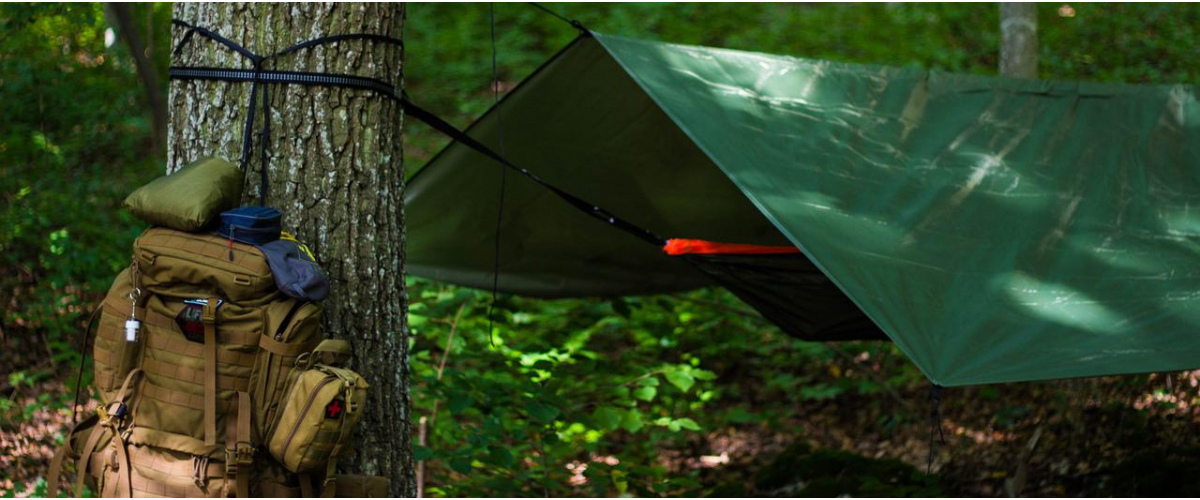
Unlike a tent, a hammock doesn’t require to be set up on even ground to give you a good night’s sleep. All that is needed is trees, and you’ll be able to get in close touch with nature, even protecting yourself from cool weather and insects with the right equipment.
Setting up a hammock is a bit of a skill in itself. This guide helps you learn to set up a hammock, use the relevant equipment and pick the right spot for your hammock experience.
Attachment and adjustments
For your hammock experience, you will need the equipment to suspend the hammock from your place of choice. This includes the ropes, the bands, the straps and the loops or carabiners for closing. In some models, the straps along with their loops come with the hammock, but sometimes you will have to get separate carabiners.
You can suspend a hammock the traditional way, between two trees, but nothing stops you from using just about any vertical structures for your hammock attachment. Avoid setting the hammock up too high or too tight.
Both the length and the width of the hammock are factors that affect the comfort of the sleeping position. The hammock should be noticeably longer than the user is tall. The width, in turn, ensures that you’ll have an ergonomically pleasant night. In the ideal hammock setup, the user’s feet reach the ground from a sitting position.
The hammock is supposed to hang, so you will want to place it between two trees or similar vertical surfaces that are 3-5 meters apart. About 30 degrees is a great angle for the suspension, with the end where your feet will be placed a bit higher than the other end. Indeed, a hammock isn’t meant to be used while laid down completely straight, but instead in a diagonal position to maximize comfort. If necessary, additional supporting equipment for your neck and knees can take the experience to another level entirely.
Remember that there is nothing stopping you from setting up a hammock indoors. In this case, you may want to put in the effort of attaching suitably durable hooks to the wall for easier and safer suspension.
Equipment
Additionally, some equipment must usually be purchased separately from the hammock itself. Depending on conditions and the location, the following should be found in a hammock sleeper’s tool kit:
- appropriate attachment equipment
- a quilt or a pad to place at the bottom of the hammock part
- a tarp with its attachment equipment
- tree huggers
- a mosquito net
- a protective bag
- a sleeping bag or a quilt
Underquilt as an addition to your sleeping bag
An underquilt is a sort of a quilt, placed under the hammock to protect the user from the cold radiating from the ground below. When compressed by the weight of the user, the insulating factor of the sleeping bag can be greatly reduced or even neutralized completely. Having its advantages as a product specifically designed to be used with a hammock, the underquilt conforms to the shape of the hammock, protecting sideways as well. While you can use a mattress meant for hiking or a cellular plastic pad, the underquilt will certainly hold its place like nothing else and provide you with the most pleasurable hammock sleeping experience.
However, if you do choose to use an air-filled mattress, remember to avoid filling it all the way up.
Many hammocks also have a layered structure that allows you to put your underquilt, mattress or pad between those layers.
Combined with an underquilt, the right sleeping bag provides great insulation against cool weather, so be sure to pick the correct sleeping bag option for your specific needs. An alternative to the sleeping bag is a simple travel blanket or a so called topquilt. Lighter than a sleeping bag and providing the user more freedom of movement, it usually lacks a zipper going all the way up, instead giving leeway for the user to tighten it up with lacing in case the sleeper should desire some more protection from the wind.
Whatever your preferences, be sure to acquire a proper underlay and a cover to keep your body warm for the optimal nature experience.
A big enough tarp gives maximum protection from the weather
What to do about the weather, though? A mere sleeping bag will not give you protection from the nature. A sudden rainfall will leave you wet and shivering, ruining your experience. A tarp is just the solution for that. It is a canopy of fabric suitable for both independent use and as an addition to your hammock.
Pick a tarp of the right size by rather choosing something too large than a tarp too small. Using ropes and wedges for attachment, the tarp should cover the entire hammock when properly set up. It is a good idea to cover the suspension parts of the hammock as well to avoid rainwater intruding via dripping down the ropes into the hammock part.
There are many ways to set up your tarp: a rectangle, or even sideways, diagonally. The typical tarp sheet is a square of 3x3 or 4x4 meters.
Tree huggers protect the delicate bark of the tree
You should always choose a suitably healthy and sturdy tree for your hammock suspension, which is at its simplest when you simply bring a rope, folded over itself, around the tree and then bring the end through the resulting loop. Of course, you may need carabines or similar equipment to properly secure the hammock, but whatever you use, you need to account for the condition of the tree itself. Check the tree for signs of rot and decay to make sure the trunk can take your suspended hammock. At worst, potential lose branches can put you in danger if they happen to fall.
Therefore, it is of utmost importance to protect the tree as well. For this purpose, you want to get yourself tree huggers. This does not refer to ecoactivists, but instead to relatively wide straps that have loops sewn to both ends. The wide strap will not damage the tree, unlike a thin, bare rope. Many hammocks come with thick ropes that you can wrap around a tree the way they are.
A mosquito net can save the night
In some areas, the local insect populations will pose a significant problem. While not necessarily dangerous, all kinds of critters can make your lovely nature experience straight up hell. Unfortunately, bloodthirsty bugs seem to prefer the same weathers that most bushcraft and outdoors enthusiasts favor.
However, even the vulnerable position you assume while sleeping in a hammock doesn’t have to be that way. While a tent would provide you more coverage against mosquitoes and other annoyances, many hammocks come with a net with a zipper attached. It is also a viable option to purchase an additional mosquito net. You will notice that they are, for the most part, easy to remove or push away when needed.
A rain cover makes your packing quick and easy
Nicknamed snakeskin, the rain cover or the protective bag has an elongated shape and an important function. To protect your hammock, you pull the cover over the hammock after the initial suspension to keep your beloved equipment from getting wet and dirty. This will also make your hammock duties a lot easier and quicker. An excellent insurance against rain, snakeskins let you spend much less effort than if you had to do everything about the suspension all over again.
Winter hammock adventures
There’s nothing stopping you from going out with a hammock in winter as well. Just remember to take care of insulation, look out for possible dead and dying branches and any snowfall from the trees above.
Location choice
With the hammock being such an excellent alternative for a tent, you’ll find lots of places viable for hammock suspension. Of course, in places without trees like some areas in Lapland, you will have nothing to suspend the hammock from.
An American favorite, hammocks are only growing more popular each year. This exciting way of getting in close touch with nature has definite merits, giving both an experience and a wonderful, relaxing sleep, and for this reason, people from all walks of life with a penchant for hiking, the great outdoors, and nature swear by hammocks.
Conclusion – experience with hammocks improves the experience
Don’t let your hammock dreams be dreams. Once you have all the needed equipment, you can test your hammock and practice the suspension. Only with experience, you will learn the practical part of this art, and when you have mastered the skill, you can sleep safely on your nature trips, knowing that you will not have to learn everything when you’re already on the field.
Hopefully you found this guide useful. Our professional staff will be eager to help you choose the right hammock and related equipment for you.





Solo Pack Hammock UL

Sleeve, olive drab

Compact Hammock, army green

Hammock Set Pro Single

Hammock suspension system LIGHT

Underblanket, olive drab


Hammock Pro Sleeping Pad